In the long history of Iran, the ayatollahs were/are a flash in the pan. The real Iran is about to emerge.
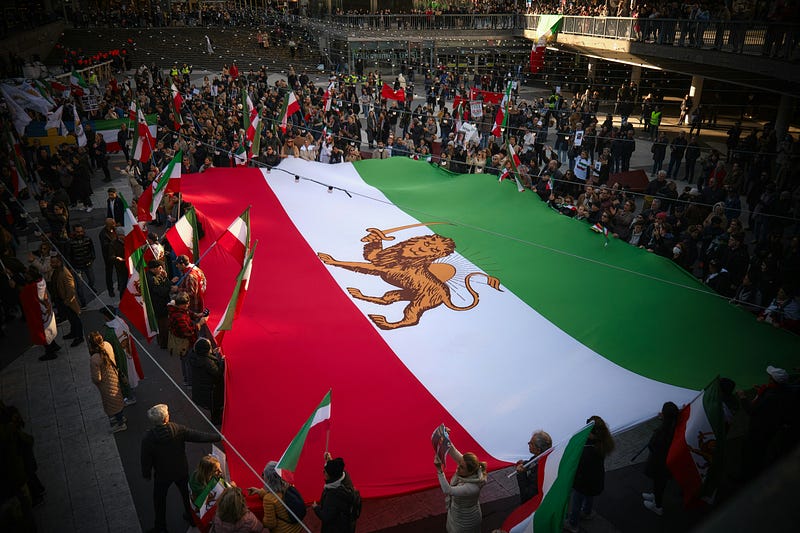
There is a bad habit in Western commentary of talking about countries and regimes as though they are the same thing.
They are not.
A regime can dominate a nation, terrorize it, impoverish it, censor it, conscript it, and still fail to become it. That is especially true in Iran, where the ruling system has spent nearly half a century trying to convince the world that the Islamic Republic is Iran.
It is not.
And if you want proof, look at the Nowruz annual Spring Equinox/New Years celebrations this year.
As the Persian New Year arrived, Iran was not at peace. It was under bombardment. Tehran was tense. Markets were subdued. Yet families were still celebrating spring with war in the background, air defenses roaring, explosions echoing. The mood described across coverage from inside and outside the country was not festive in the usual sense. It was strained, surreal, wounded. And yet the rituals continued.
Because Nowruz is older than the Islamic Republic. It is older than the ayatollahs, older than the Revolutionary Guards, older than the slogans, the prison system, the morality police, the nuclear standoffs, virulent antisemitism, the hostage-taking foreign policy, and the whole machinery of grievance and repression that has defined this regime for decades. Nowruz belongs to Iran, not to the men who rule it.
That is why the images coming out of Tehran in recent days have carried so much emotional force. People buying flowers. People laying the Haft-Seen table. People marking the spring equinox while living through fear, uncertainty, inflation, blackouts, censorship, and war. In thinner crowds and quieter bazaars, in makeshift celebrations and subdued family gatherings, you could still see the deeper country asserting itself.
That is the real story.
Traditional rituals reveal what a people still believes itself to be when everything else is under assault. And what Iranians seemed to be saying, “we are still here, and we are more than this government.”
That is why Prince Reza Pahlavi’s statement today struck so many as deeply poignant. He put his finger on the distinction that matters most right now:
“Iran is not the Islamic Republic.
Iran’s civilian infrastructure belongs to the Iranian nation and is the asset of a free Iran’s future. The Islamic Republic’s infrastructure is a machine of repression and terror, deployed to prevent that future from being realized.
Iran must be protected; the Islamic Republic must be eradicated.
I ask President Trump and Prime Minister Netanyahu to continue targeting the regime and its apparatus of repression, while at the same time preserving Iran’s civilian and vital infrastructure, which our people need to rebuild the country.
With the support of the United States of America and Israel, and above all with the sacrifices of patriotic Iranians, the moment of Iran’s freedom is near.
Long live Iran.” — Prince Reza Pahlavi. 3.22.2026
Unfortunately for Mr. Pahlavi, the Iranian people, and all the world, war has a terrible logic of its own. It’s unpredictable.
As any student of military history can tell you, once a conflict escalates, it rarely stays neatly confined to military targets. It spreads outward. It starts with command centers and missile stockpiles and naval assets, and then it moves toward power plants, ports, fuel networks, communications systems, and the broader skeleton of civilian life. That is what makes this moment so dangerous. If the goal is to weaken or even destroy the Islamic Republic, there is a real risk of also destroying the material foundations that any future Iran would need in order to stand back up again.
A free Iran will still need electricity. It will still need roads, ports, water systems, telecommunications, homes, markets, and functioning civil life. It will need a country left to inherit.
Even in wartime, even amid fear, even under a regime that has spent decades trying to redefine Iranian identity in its own ideological image through violence, repression, and terror, ordinary people were still reaching for the things that predate the regime and will outlast it. They were still setting the table for spring this year.
Iran is more than its rulers. The Islamic Republic may control the state — for now. But it does not own the nation’s soul.
The regime rules Iran. Yes. For now, if barely. And perhaps, not for much longer.
But it does not fully define Iran. Never has.
That much is clear from the lengths the regime went to over the years to repress and quash mass protest movements, which sprang up despite the danger. Or perhaps, because of it.
The last vestige of the dying Islamic Republic regime continues to punish protestors, dissenters, journalists, students, and anyone else viciously, even in the last gasp of its leadership. It’s disgusting.
Regimes rule by force. And that makes them brittle.
Nations survive by community, tradition, family, faith. This spring, as ever, Iran remembers itself.
May next spring dawn on a free Iran.
(Contributing writer, Brooke Bell)